

Emergency Roof Tarping, Available Nationwide 24/7
A damaged roof lets water into your home within minutes, and interior damage can escalate within 24 to 48 hours. Trueshelter Roof Repair provides emergency roof tarping built to stop that clock, with heavy-duty materials, proper anchoring, and full photo documentation for your insurance claim.
What Does Emergency Roof Tarping Actually Involve?
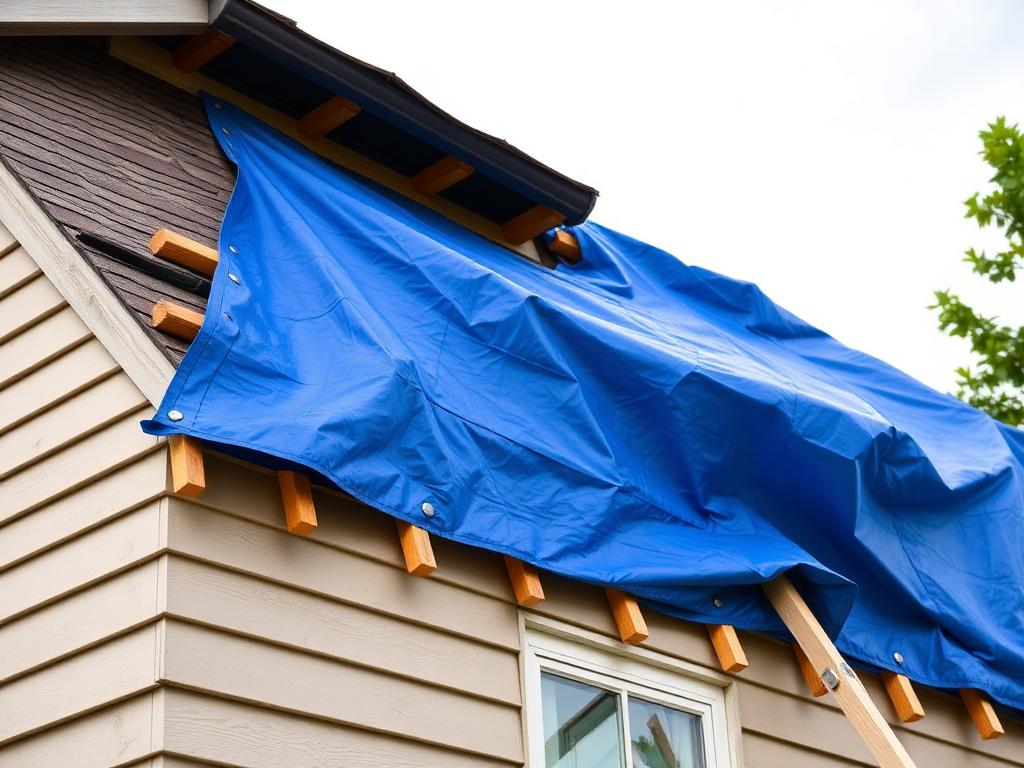
Roof tarping covers storm-damaged sections of your roof with a heavy-duty waterproof barrier that stops water intrusion until permanent repairs happen. A proper installation uses thick polyethylene material anchored with lumber battens, not nails punched straight through the tarp.

Materials
Heavy-duty polyethylene tarp, 6 to 10 mil thick, rated for both wind resistance and UV exposure, since thinner store-bought tarps shred fast in real storm conditions and offer no lasting protection.
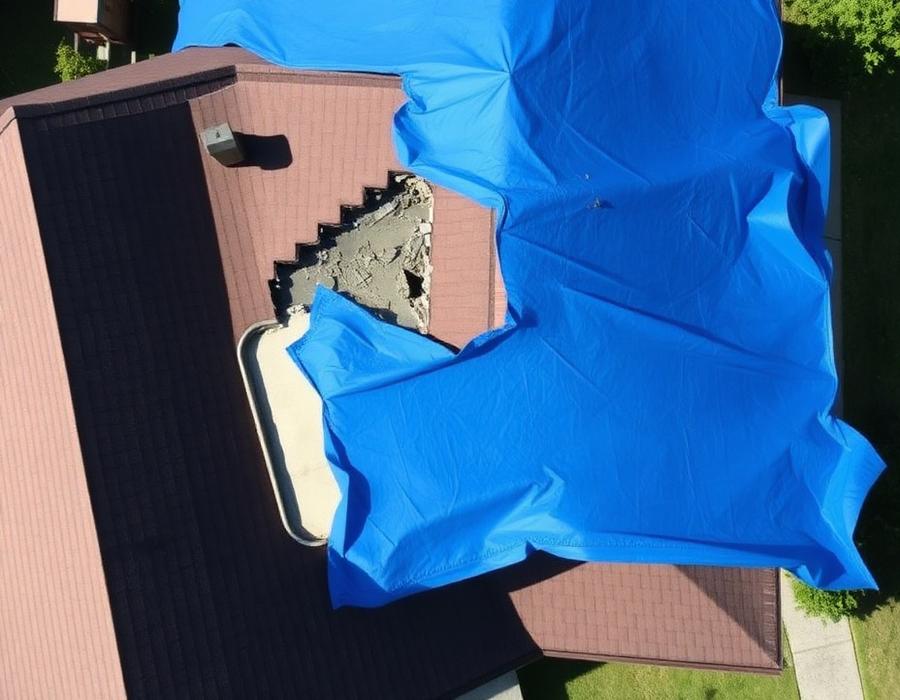
Coverage
The tarp extends 3 to 4 feet beyond the visible damaged area on every side, since storm damage often spreads further under the surface than what appears obvious from the ground.
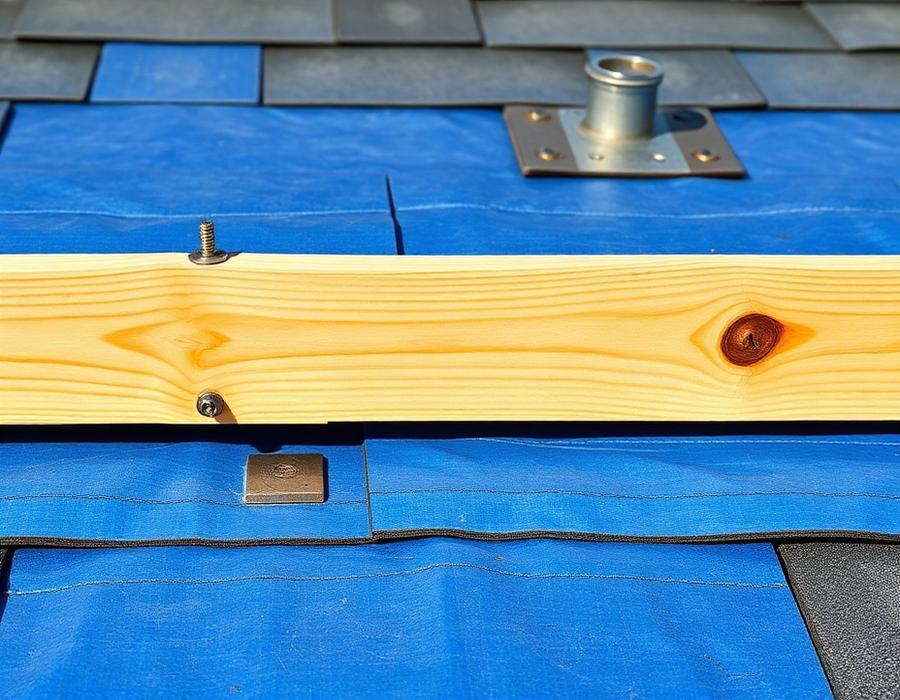
Anchoring
2x4 lumber battens and corrosion-resistant fasteners hold the tarp in place, never staples or loose rope, since those common shortcuts fail fast under real wind and rain pressure.
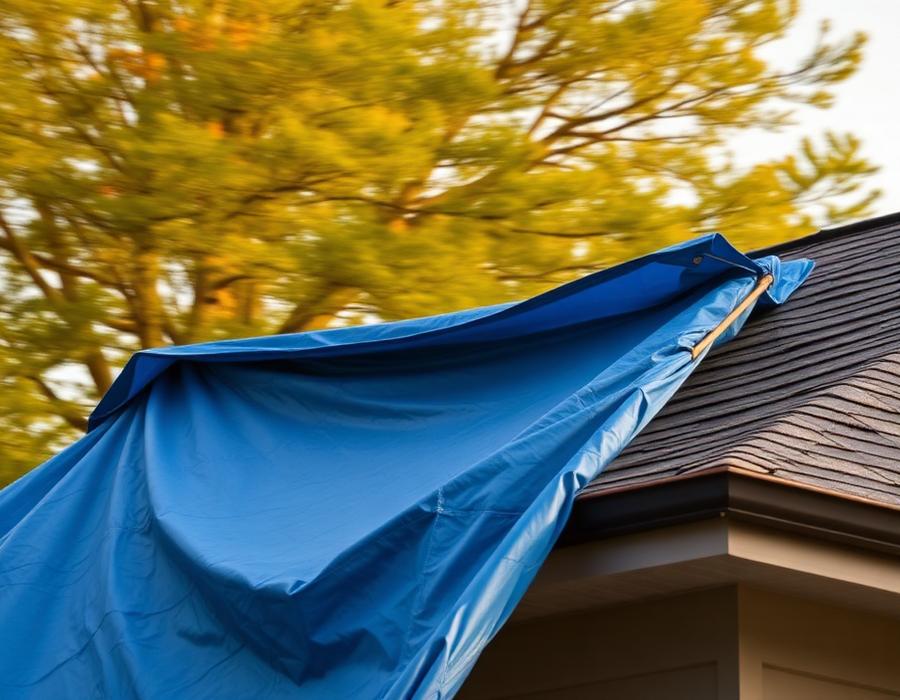
Duration
A properly installed tarp holds securely for roughly 30 to 90 days, giving you enough time to schedule permanent repairs without water continuing to enter your home.
How Do You Know You Need Emergency Roof Tarping?
Some damage is obvious. Other damage only shows up once water is already inside your walls. Here are the signs worth checking after any storm.
Missing or Lifted Shingles
Gaps in your shingle pattern expose the roof deck underneath directly to rain, and even one missing shingle can let water in fast during a storm.
Visible Daylight in the Attic
A flashlight check from inside the attic often reveals holes and gaps that stay completely invisible from the ground or the roofline below.
Water Stains on the Ceiling
A spreading stain on your ceiling almost always means active water intrusion is already happening somewhere directly above that exact visible spot.
Tree Limb or Debris on the Roof
Even without a visible hole, a tree limb or heavy debris resting on the roof creates ongoing structural risk you genuinely shouldn't ignore.
Storm Damage Confirmed Nearby
If your area took a confirmed direct hit from a storm, scheduling an inspection is worth it even without any obvious visible signs.
Failed DIY Patch
A do-it-yourself patch that already failed once needs professional coverage fast, before the next storm finds that same exact weak spot.
Spot any of these? Get a professional tarp on before the next storm.
Call (877) 540-7783Need Emergency Roof Tarping Right Now?
Wherever you are, our crews can get a tarp on your roof today.
How Does Professional Roof Tarping Work, Step by Step?
Professional roof tarping follows a specific sequence. Skipping steps is exactly what causes a tarp to fail in the next storm.
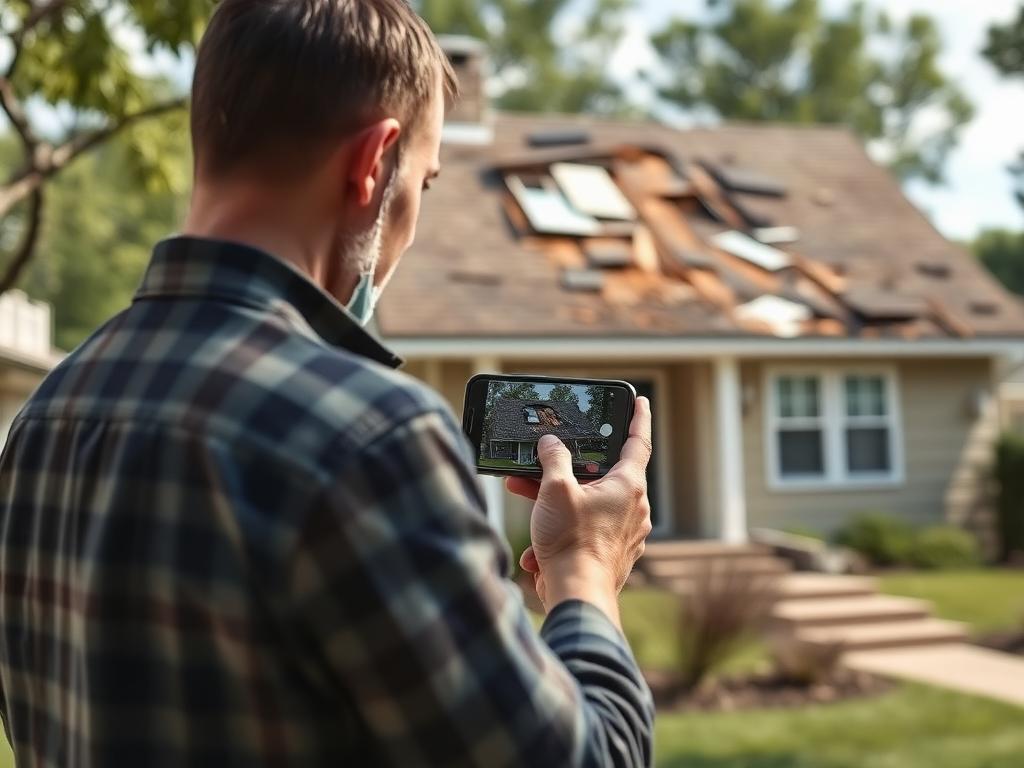
Report the Damage
Reach our around-the-clock line or submit the quick online form with your address and a short damage description.
Crew Is Dispatched
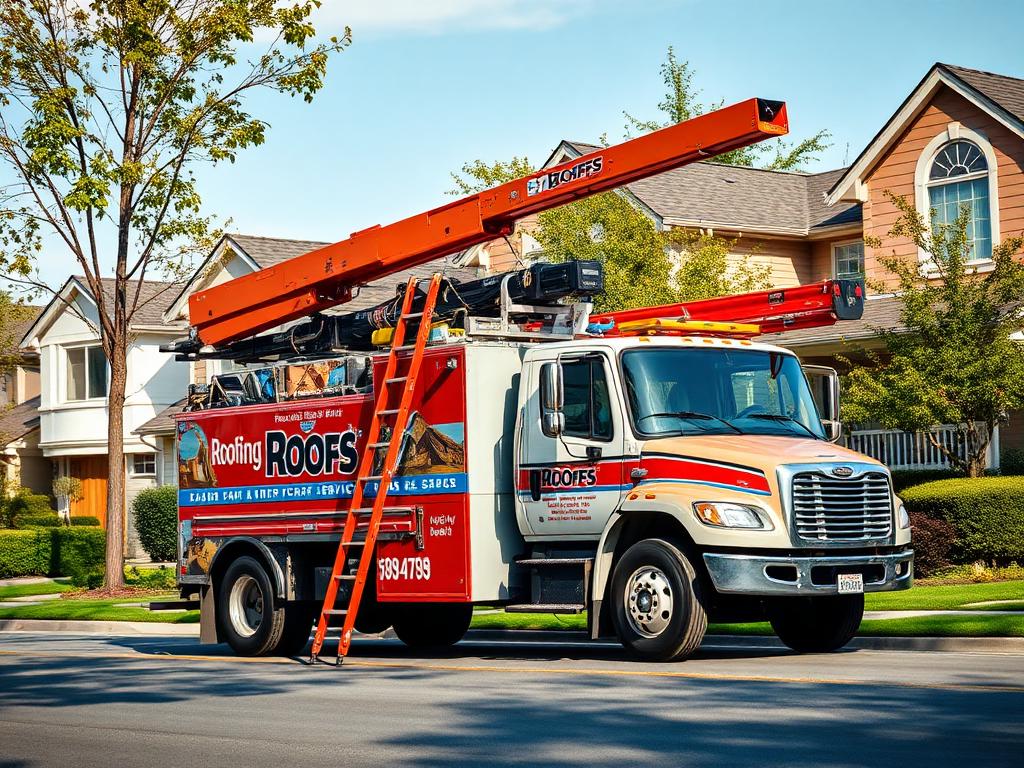
The closest available tarping crew gets dispatched to your address, with an estimated arrival window sent to you fast.

Damage Gets Documented
Every damaged section gets photographed before any tarp goes up, giving you complete records for your insurance claim.
Roof Made Watertight
Your roof gets tarped and fully sealed on site, with every detail reviewed with you before the crew leaves.
What Affects the Cost of Roof Tarping?
Roof tarping cost depends on a handful of real factors, not a flat number that applies to every home.
Roof Accessibility
A single-story home with easy ground access costs less than a steep, multi-story roof surrounded by landscaping or fencing obstacles.
Roof Pitch
Anything steeper than a standard 6:12 slope takes longer to work on safely and requires additional harnesses, ropes, and safety equipment.
Extent of Damage
A small, localized hole costs far less to cover than an entire roof section stripped away by sustained high wind.
Weather at the Call
Active rain or high wind at the exact time of the call can slow installation down and affect the final pricing.

Does Insurance Cover Emergency Roof Tarping?
In most cases, yes. Most homeowners policies classify tarping as a damage mitigation expense. It gets reimbursed alongside your repair claim, not deducted from it.
Insurance companies generally expect homeowners to take reasonable steps to prevent further damage after a storm. A professionally installed tarp, backed by photos and a written report, becomes documented proof that you met that expectation.
- A tarp installed late, or not at all, can be used to argue that some interior damage was preventable.
- Professional installation photos give your adjuster clear evidence the mitigation step was handled correctly.
- Our team coordinates directly with your insurer and works alongside our insurance claim help service.
Where Is Emergency Roof Tarping Available?
Trueshelter Roof Repair provides emergency roof tarping services nationwide, matched to the storm risk and code requirements of your specific state.


Don't see your state listed yet? Call anyway. Our dispatch network covers areas beyond what's shown here.
Ready for Same-Day Roof Tarping?
Whichever type of damage you're dealing with, our team can respond today.
What Other Roof Repair Services Might You Need?
Roof tarping is almost always the first step, not the last one. These are every other roof repair service we provide.
Why Choose Trueshelter for Emergency Roof Tarping?
Not every tarping job is done the same way, and the difference shows up the first time real wind hits it.
Here is what sets our crews apart when your roof cannot wait.
Correct Materials Every Time
Every job uses genuine 6 to 10 mil polyethylene, never the thin, flimsy tarp material sold at a typical hardware store.
Proper Anchoring, Not Shortcuts
Every tarp gets secured with real 2x4 battens and fasteners, never staples, bungee cords, or nails punched straight through it.
Full Interior Verification
Every completed job ends with a genuine attic check from inside, confirming no visible daylight gaps remain anywhere at all.
Insurance-Ready Documentation
Every job includes clear before and after photos, prepared exactly the way insurance adjusters actually expect to review them.
24/7 Emergency Dispatch
Crews respond around the clock, including nights, weekends, and holidays, so a storm never has to wait for business hours.
One Team, Start to Finish
The same crew handles the tarping, the documentation, and the permanent repair that follows, with no confusing handoffs at all.
Frequently Asked Questions
What is emergency roof tarping, exactly?
Emergency roof tarping covers storm-damaged sections of a roof with a heavy-duty waterproof barrier. It stops rain from entering the home while permanent repairs get scheduled. Proper installation uses thick polyethylene material anchored with lumber battens, not nails punched directly through thin tarp material.
Stop Water Damage Before It Spreads
Whatever caused the damage, and wherever you're located, a professionally installed tarp is the fastest way to stop the clock on water intrusion.