
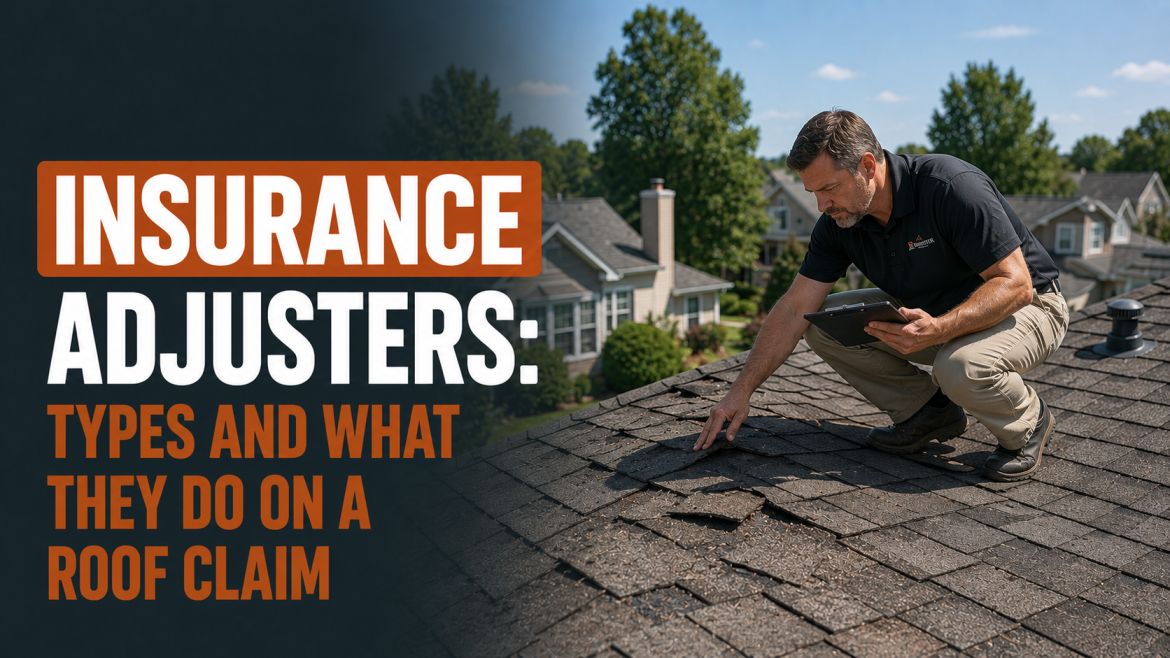
Three genuinely different types of adjuster can inspect a damaged roof. Only one, a public adjuster, is retained by and answers to the homeowner directly. Staff and independent adjusters both work for the insurance carrier, regardless of how collaborative the interaction feels in person.
Neither carrier-side adjuster is dishonest by default. But neither represents the homeowner's interests either, which is precisely the role a public adjuster exists to fill. Understanding which type is handling a claim shapes how a homeowner should prepare for the inspection.
Emergency roof inspection services and insurance claim help can independently verify or supplement an adjuster's findings. The services directory covers every option nationally.
What Are the Three Types of Insurance Adjusters?
Understanding which type is handling a specific claim clarifies both what to expect and what recourse exists if the findings seem incomplete.
Where Adjusters Fit Within the Claims Process
This adjuster relationship sits within the broader roof damage insurance guide. It sits at the inspection and coverage determination stage that follows claim filing.
The Three Adjuster Types Compared
Adjuster Type | Employed By | Represents |
|---|---|---|
Staff adjuster | Directly employed by the insurance carrier | The carrier's interests |
Independent adjuster | Contracted by the carrier, often for catastrophe response | The carrier's interests |
Public adjuster | Retained directly by the homeowner | The homeowner's interests |
What Does a Staff Adjuster Actually Do?
This is the adjuster type most homeowners encounter on a routine, non-catastrophic claim.
The Staff Adjuster's Role
A staff adjuster is a direct employee of the insurance carrier. They handle claims as an ongoing part of their job, across a caseload the carrier assigns. Staff adjusters typically handle the steady volume of claims outside major catastrophic events.
What This Means for a Homeowner
Documenting roof damage for insurance covers how a homeowner's own documentation provides a useful cross-reference. The adjuster's report, however professionally prepared, reflects the carrier's assessment process, not an independent third-party evaluation.
What Does an Independent Adjuster Do Differently?
This adjuster type appears most often when claim volume spikes beyond what staff adjusters can handle.
Why Carriers Use Independent Adjusters
Independent adjusters are contracted rather than directly employed. Carriers bring them in during periods of high claim volume. This most commonly follows a major regional storm that generates more claims than staff adjusters can handle promptly.
How This Affects Claim Handling
An independent adjuster typically handles a specific claim once, without the ongoing regional relationship a staff adjuster might have. This can mean less familiarity with local repair costs and material availability. A contractor's current, local estimate can meaningfully supplement this kind of assessment, particularly during high-volume catastrophe response.
What Does a Public Adjuster Do?
Public adjusters occupy a fundamentally different position, working exclusively for the policyholder rather than any carrier.
The Public Adjuster's Role
A public adjuster is a licensed professional retained directly by the homeowner. They are typically compensated through a contingency fee based on a percentage of the final settlement. Their role covers documentation, negotiation, and dispute resolution throughout the claims process.
Factor | Staff or Independent Adjuster | Public Adjuster |
|---|---|---|
Who retains them | The insurance carrier | The homeowner |
Compensation structure | Salary or contracted fee from carrier | Contingency percentage of settlement |
Whose interest they represent | The carrier | The homeowner |
When Hiring a Public Adjuster Makes Sense
Why roof insurance claims get denied and disputed settlement amounts are the two scenarios where hiring one most often justifies the fee. For a straightforward, undisputed claim, the fee may not be worth it. For a complex or significantly underpaid claim, dedicated representation can meaningfully improve the result.
What Does an Adjuster Actually Look for on a Roof Inspection?
The inspection follows a fairly consistent checklist regardless of which adjuster type is conducting it.
The Standard Inspection Checklist
Confirming the cause of damage matches a covered peril consistent with the claimed date of loss
Measuring the extent and pattern of damage across the roof surface
Distinguishing genuine storm-related damage from pre-existing wear
Documenting the specific materials, quantities, and labor needed for repair
Checking for code-related upgrades that might apply given the roof's age
What roof damage is actually covered covers the coverage determinations an adjuster's findings feed directly into. The inspection is the pivotal moment where most of a claim's outcome gets established.
Why the Adjuster's Vantage Point Matters
Adjusters conducting exterior-only or drone-based inspections, increasingly common practice, can miss damage a closer, hands-on inspection would catch. Insurance appraisal clause explained becomes relevant precisely when this kind of limited inspection produces a scope narrower than a contractor's direct assessment.
How Should a Homeowner Prepare for an Adjuster's Visit?
A few concrete preparation steps meaningfully improve how completely an inspection captures the actual damage.
Practical Preparation Steps
Have independent documentation, photos and a contractor estimate, ready before the adjuster arrives
Walk the property with the adjuster where safely possible, pointing out specific areas of concern
Take notes during the inspection, including any findings or explanations provided verbally
Request a copy of the adjuster's written report and line-item estimate once available
What to Do if the Adjuster's Findings Seem Incomplete
Supplemental roof insurance claims covers the process for addressing damage an inspection missed. Most carriers have an established procedure for this, particularly on projects where tear-off later reveals hidden conditions. Storm damage repair performed under a documented, itemized scope supports this kind of claim directly.
How Do Adjuster Incentives Actually Work?
Understanding the incentive structure realistically, rather than assuming bad faith or perfect neutrality, is the useful middle ground.
Understanding the Professional Standard
Staff and independent adjusters operate under professional and ethical standards requiring accurate, good-faith assessment. This obligation exists because the structural incentive, working for the party paying the claim, could otherwise pressure toward minimizing payouts. Understanding this tension is the realistic way to approach the relationship.
Why Independent Verification Still Matters
Even under a good-faith standard, an adjuster with a large caseload can genuinely miss items. A slower, more focused inspection identifies what limited time per property does not. This is not a failure of professional standards. It is simply the practical reality of inspection volume and time constraints.
Do Adjusters Use Technology to Assess Roof Damage?
Increasingly, yes. Aerial imagery, drone inspection, and satellite-based tools have become standard, particularly following widespread catastrophic events.
What This Technology Can and Cannot Capture
Aerial and drone imagery efficiently documents overall roof condition across a large area, valuable during catastrophe response. It is considerably less effective at capturing subtle indicators, such as a compromised seal strip or a hairline crack, that a hands-on inspection would catch. A homeowner assessed primarily through aerial imagery has a reasonable basis to request a supplemental, in-person inspection.
Which States See the Most Distinctive Adjuster Activity?
Adjuster type and inspection patterns vary by state, given differing claim volume and regulatory environments.
Storm damage repair across Texas sees heavy independent adjuster deployment during peak hail season, given the state's exceptional claim volume. Hail damage roof repair in Colorado follows a similar pattern tied to the state's well-documented hail corridor.
Roof replacement services in Florida relies heavily on independent adjusters following hurricanes, given the scale of claims a single storm can generate. Emergency roof repair across Louisiana sees comparable surges tied to hurricane exposure.
Roof repair services in Illinois handles significant adjuster activity tied to hail exposure. Storm damage repair in Georgia navigates both staff and independent deployment depending on the event's scale.
Can a Homeowner Request a Different Adjuster?
In some circumstances, yes, though the process and success rate vary by carrier and reason.
When a Reassignment Request Makes Sense
A homeowner who experiences a genuinely unprofessional interaction, or has documented reason to believe an inspection was materially incomplete, can request reassignment through the claims department. This differs from simply disagreeing with a coverage determination, which is better addressed through the standard appeal process instead.
How to Document a Reassignment Request
Keep a written record of specific interactions, including dates, what was said, and any documented factual errors in the report. This strengthens a request considerably more than a general complaint about dissatisfaction.
How Long Does an Adjuster's Inspection Typically Take?
A standard residential inspection takes 30 minutes to an hour. This varies based on roof size, complexity, and whether interior damage is also documented.
Why Inspection Length Is Not a Reliable Quality Indicator
A longer inspection does not automatically mean a more thorough one. A shorter one does not automatically mean an incomplete one. The quality of the resulting documentation, not time spent on site, is the more reliable measure.
Do Adjusters Ever Make Mistakes on Purpose?
Deliberate misconduct is rare and carries serious professional consequences. Genuine errors from time pressure or an honest difference in judgment are considerably more common than intentional wrongdoing.
Why This Distinction Matters for a Homeowner's Response
Approaching a disagreement as a probable honest error, rather than an assumed bad-faith act, generally produces a more productive interaction. Reserve formal complaints for a genuine pattern of unreasonable determinations, not a single disputed judgment call.
Frequently Asked Questions About Insurance Adjusters on Roof Claims
The questions below cover what each adjuster type does and how to prepare for their inspection.
What Does an Insurance Adjuster Look for on a Roof?
An adjuster confirms the cause matches a covered peril and measures the extent of damage. They distinguish storm damage from pre-existing wear and document the materials and labor needed.
Should I Hire a Public Adjuster for a Roof Claim?
For a straightforward claim, it is often unnecessary given the contingency fee. For a complex or significantly underpaid claim, dedicated representation can meaningfully improve the outcome.
What Is the Difference Between an Independent Adjuster and a Public Adjuster?
An independent adjuster is contracted by the carrier and represents its interests, commonly deployed during catastrophe response. A public adjuster is retained by the homeowner and represents the homeowner exclusively.
Does the Insurance Company's Adjuster Work for Me?
No. Both staff and independent adjusters represent the carrier, even though the interaction may feel collaborative. Only a public adjuster represents the homeowner's interests specifically.
Can I Get a Second Opinion if I Disagree With the Adjuster's Findings?
Yes. An independent contractor inspection provides a second assessment that can support a supplemental claim, a formal appeal, or the appraisal process for amount-of-loss disputes.
Why Would an Adjuster Miss Damage That a Contractor Later Finds?
Adjusters increasingly conduct exterior-only or drone-based inspections with large caseloads and limited time per property. Both factors can produce less thorough documentation than a contractor's focused, hands-on inspection.