
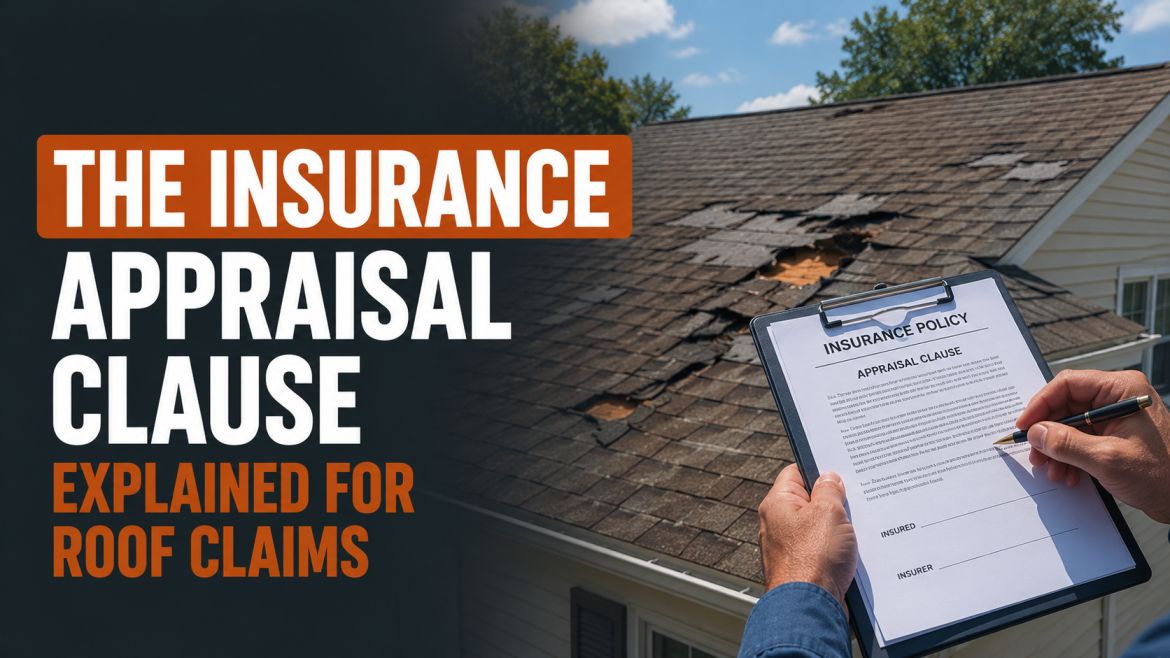
The insurance appraisal clause resolves disagreement about the amount of loss on damage a carrier has already acknowledged as covered. It does nothing for a claim denied outright on coverage grounds. Appraisal was never designed to decide whether coverage applies in the first place.
That distinction determines whether appraisal is even the right tool for a specific dispute. A carrier valuing acknowledged hail damage at a fraction of a legitimate estimate is a genuine appraisal scenario. A carrier denying the claim entirely is a coverage dispute, requiring a different response.
Hail damage roof repair and emergency roof inspection services supply the estimate and documentation an appraiser actually evaluates. The services directory covers every option nationally.
What Is the Insurance Appraisal Clause?
The appraisal clause is a provision found in most property insurance policies. It provides an alternative to litigation for resolving disagreement about the amount of a covered loss.
Where Appraisal Fits Within Claims Disputes
This dispute mechanism connects to the broader roof damage insurance guide. It sits alongside the standard appeal process as one of several paths once a homeowner and carrier reach an impasse.
What Appraisal Resolves and What It Does Not
Appraisal Resolves | Appraisal Does Not Resolve |
|---|---|
Disputed dollar amount on acknowledged covered damage | Whether coverage applies at all |
Disagreement over repair scope on a covered claim | A denial based on policy exclusion |
Disputed depreciation or line-item pricing | Bad faith claims or legal liability questions |
In practice: this is the single most important distinction to confirm before invoking appraisal. A carrier disputing the scope or price of covered hail damage is a textbook appraisal case. A carrier arguing wear and tear rather than hail is arguing coverage, not amount, and appraisal will not resolve it.
How Does the Appraisal Process Actually Work?
Appraisal follows a defined sequence. Understanding each stage clarifies both the timeline and where the process can end early with agreement.
The Step-by-Step Sequence
Either party, homeowner or carrier, submits a written demand invoking the appraisal clause
Each party selects and pays for its own independent, qualified appraiser
The two appraisers inspect the damage and attempt to agree on the amount of loss
If they agree, that figure becomes binding without further steps
If they disagree, the two appraisers jointly select a neutral umpire
The umpire reviews both assessments and issues a decision; agreement with either appraiser becomes binding
Step | Typical Timeframe |
|---|---|
Carrier response to appraisal demand | Often required within roughly 20 days per policy language |
Appraiser inspections and initial assessment | Several weeks |
Umpire selection and final decision, if needed | Additional weeks to a few months |
What Determines the Final Amount
The appraisal panel's job is narrow: determine what it costs to return the property to its pre-loss condition, by repair or replacement. Quality evidence matters considerably here. Photographs, an independent estimate, material availability data, and code compliance requirements all shape how persuasively an appraiser can advocate for a specific figure.
What Does Appraisal Actually Cost?
Appraisal is not free even when it succeeds. Understanding the real cost structure before invoking the clause avoids an unwelcome surprise partway through.
The Real Financial Commitment
Each party pays for its own selected appraiser. The umpire's fee, when a neutral third party becomes necessary, is typically split between both sides.
Cost Component | Who Pays |
|---|---|
Homeowner's appraiser | Homeowner |
Carrier's appraiser | Carrier |
Umpire fee (if needed) | Typically split evenly between both parties |
In practice: a homeowner should budget for paying both their own appraiser's fee and roughly half of an umpire's fee if the two appraisers disagree. Combined, this can run into the low thousands of dollars. Weigh this cost against the size of the disputed gap, since a small disagreement may not justify the expense.
When Does Appraisal Actually Make Sense?
Not every dispute is a good fit for this process. Knowing the difference before invoking the clause saves both time and money.
Good Candidates for Appraisal
The carrier has acknowledged the damage as covered but values the repair well below a legitimate estimate
The dispute centers on specific line items, such as code-required upgrades or matching material
The dollar gap between the carrier's offer and a reasonable estimate justifies the appraisal cost
Poor Candidates for Appraisal
Why roof insurance claims get denied covers denial reasons that generally fall outside appraisal's scope. Roof depreciation and recoverable holdback covers a settlement dispute that can sometimes be resolved this same way. A coverage denial based on wear and tear or a missed filing deadline is different. Appraisal has no authority to reverse that determination, and invoking it wastes the cost without addressing the actual disagreement.
What Is Changing in Appraisal Law?
Appraisal procedure is not static. Recent legislative activity shows several states actively revising how the process works.
The Colorado Example
Colorado's House Bill 26-1247 applies to homeowners policies issued or renewed on or after January 1, 2027. It requires a mandatory, binding appraisal process available at either party's request. This extends to disputes over amount of loss, causation, and scope of repair, though not coverage determinations. The bill also sets a completion deadline: the process must conclude within four months of umpire selection.
In practice: this statutory tightening reflects a broader trend toward faster, more predictable appraisal. Specific requirements still vary by state. Confirming current state-specific rules, rather than assuming a uniform national process, remains necessary.
How Do You Choose a Qualified Appraiser?
The appraiser selected matters considerably to the outcome. Confirming genuine independence and relevant experience is worth the extra diligence.
What to Look for in an Appraiser Selection
An effective appraiser combines genuine property damage valuation expertise with no financial stake in the claim's outcome. Public adjusters sometimes serve in this role. Homeowners should confirm the specific appraiser's independence and roofing experience directly, rather than assuming any licensed professional fits the role.
Insurance adjusters: types and what they do covers the distinction between the original claim adjuster and the appraiser selected for this dispute process. Storm damage repair documentation frequently serves as the evidence base an appraiser reviews. ACV vs RCV roof coverage compared covers a related settlement calculation dispute that sometimes overlaps with appraisal.
What Happens After the Appraisal Award?
Once a decision is reached, the process closes with an enforceable outcome. The amount is not open to further negotiation.
Why the Award Is Binding
Once the panel reaches a decision, through agreement or umpire ruling, that amount becomes binding on both parties. The carrier must adjust the claim payment to match it. The homeowner cannot seek a higher figure on that same question, absent a separate legal basis such as fraud in the process itself.
Does Appraisal Affect the Right to Sue Later?
Completing appraisal does not automatically waive other legal rights. The specific interaction with subsequent litigation depends on the policy language and state law.
What Appraisal Does Not Prevent
A homeowner who completes appraisal generally retains the right to pursue separate legal claims. This includes bad faith handling or coverage disputes that arose independently of the amount-of-loss question. Confirming this with an attorney is worthwhile in any case involving genuine concern about how the broader claim was handled.
Which States Handle Roof Appraisal Differently?
Appraisal procedures, timelines, and regulatory requirements vary meaningfully by state, making location-specific confirmation worthwhile before invoking the clause.
Hail damage roof repair across Texas sees appraisal invoked frequently, given the state's exceptionally high hail claim volume. Storm damage repair in Colorado operates under evolving statutory requirements given recent legislative attention to appraisal procedure.
Roof replacement services across Florida navigates appraisal within a detailed statutory claims framework. Emergency roof repair in Louisiana sees appraisal used commonly given the state's hurricane-driven claim volume.
Roof repair services in Illinois handles appraisal disputes shaped by significant hail exposure. Storm damage repair across Georgia navigates appraisal within the state's specific regulatory framework.
Can Either Party Refuse to Participate in Appraisal?
Once properly invoked, appraisal is generally mandatory for both parties. It is not an optional process either side can simply decline.
What Happens if a Carrier Resists
A carrier that refuses to participate, or unreasonably delays selecting its appraiser, can face legal consequences depending on state regulation. The clause is a contractual provision both parties agreed to at the outset. A homeowner facing resistance should document the delay and consider the state insurance department or legal counsel.
Can a Homeowner Withdraw From Appraisal Once Started?
Withdrawing is generally difficult once both appraisers are selected and the process is underway. The clause functions as a binding commitment, not a step either party can abandon if the direction looks unfavorable.
Is Appraisal Available on Every Homeowners Policy?
Most standard homeowners policies include an appraisal clause, though specific language and timelines vary by carrier and state.
Confirming the Clause Exists Before Assuming It Applies
Review the specific policy document for an appraisal provision rather than assuming it applies universally. A small number of policies genuinely lack this provision, or include modified terms that differ from the general process described here.
Can a Contractor Serve as an Appraiser?
Some contractors with relevant credentials and no direct stake in the claim can serve as an appraiser, though qualification requirements vary by state.
Why Independence Matters More Than Credentials Alone
A contractor who would personally profit from the disputed repair generally cannot serve as an impartial appraiser for that same claim. The financial interest compromises the independence the role requires. An appraiser with genuine roofing expertise but no stake in the project's outcome satisfies both standards the process depends on.
Frequently Asked Questions About the Insurance Appraisal Clause
The questions below cover how the process works, what it costs, and where its authority stops.
What Is the Appraisal Clause in Insurance?
The appraisal clause is a policy provision offering an alternative to litigation for amount-of-loss disputes, distinct from disputes over whether coverage applies at all.
How Does the Appraisal Process Work?
Each party selects and pays for an independent appraiser. The two attempt to agree on the amount of loss. If they cannot, they jointly select a neutral umpire whose decision becomes binding.
How Much Does Appraisal Cost?
Each party pays for its own appraiser, and any umpire fee is typically split evenly. Combined costs can run into the low thousands of dollars.
Can Appraisal Reverse a Denied Claim?
No. Appraisal resolves the amount of an acknowledged covered loss. It cannot reverse a denial based on a coverage exclusion such as wear and tear or a missed deadline.
What Is the Difference Between Appraisal and Mediation?
Appraisal produces a binding decision through two appraisers and, if needed, an umpire. Mediation is typically non-binding, and either party can walk away without a resolution.
Is Appraisal Always the Right Choice for a Disputed Roof Claim?
No. It makes sense for genuine amount-of-loss disputes on acknowledged damage. For coverage denials, or small dollar gaps that would not justify the cost, a direct appeal or legal consultation is often more appropriate.