
A hailstorm leaves dozens of visible dents across a metal roof. The roof still sheds water perfectly. It still resists wind uplift as designed. Under a cosmetic damage exclusion, that combination often means denial. The damage exists, but the carrier considers it appearance only, not function.
This exclusion frustrates homeowners more than almost any other denial type. The dents are real and visible. A carrier's refusal to pay can feel arbitrary. It usually traces back to a specific test written into the policy. That test, and what evidence challenges it, shapes how a homeowner should respond.
Emergency roof inspection services and hail damage roof repair can assess whether damage crosses from cosmetic into functional. The services directory covers every option nationally.
What Is a Cosmetic Damage Exclusion?
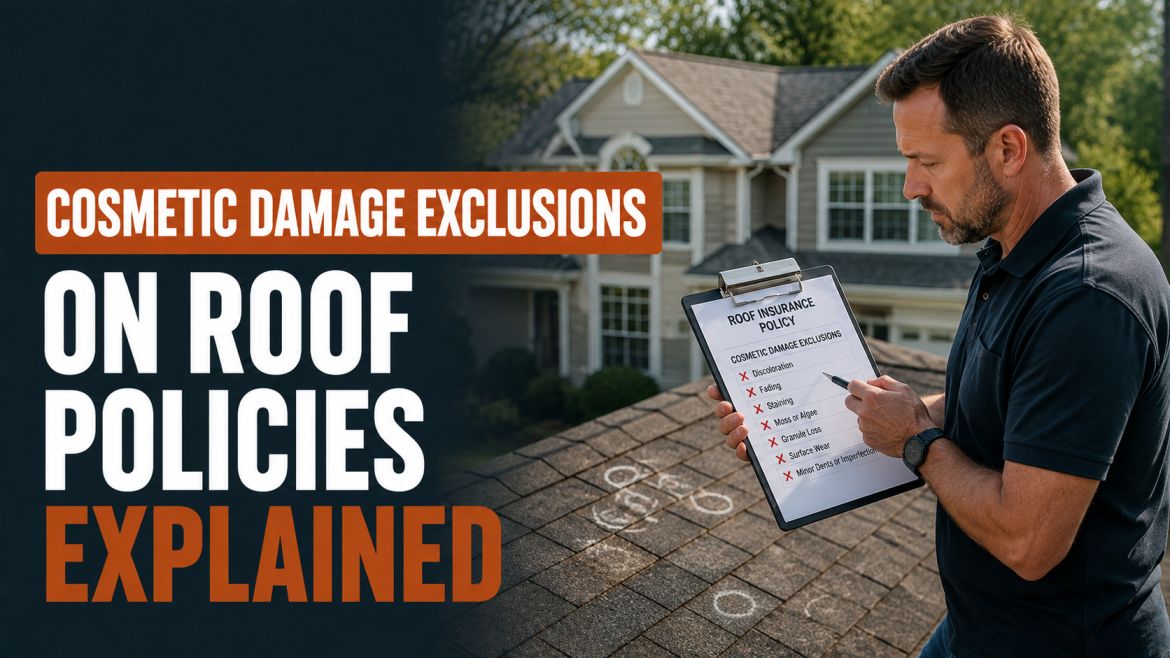
This exclusion denies payment for damage that affects only appearance, not the roof's ability to perform its job. It appears most often as an endorsement added specifically to metal roof policies.
Where This Fits Within Coverage Determinations
What roof damage is actually covered covers the broader coverage framework this exclusion sits within. It connects directly to the roof damage insurance guide as one specific carve-out within standard policy terms.
Cosmetic Versus Functional Damage
Damage Type | Carrier Treatment |
|---|---|
Dents that do not break the surface coating | Typically classified as cosmetic |
Dents that crack, split, or puncture the material | Typically classified as functional |
Damage affecting drainage or water shedding | Typically classified as functional |
Surface marking with no measurable performance change | Typically classified as cosmetic |
In practice: the visual severity of a dent is not the deciding factor. A large, deep dent that stays intact and sealed can still get classified as cosmetic if it does not compromise performance. Homeowners often find this the hardest part of the exclusion to accept.
Why Does This Exclusion Target Metal Roofing Specifically?
Metal roofing dents visibly under hail impact in a way that asphalt shingles generally do not. That visual difference is exactly what created demand for this specific exclusion.
The Underlying Logic
Asphalt shingle hail damage typically involves granule loss or mat bruising. These changes can shorten the material's service life, even without a visible mark. Metal roofing dents visibly under identical impact while often retaining full watertight performance.
Hail damage covers the broader mechanics of how hail affects different roofing materials, a useful comparison point for understanding why metal specifically drew this exclusion.
How Do Carriers Actually Test for Functional Impact?
A functional assessment looks past the visible dent to ask a narrower, more specific question about actual performance.
What Adjusters Typically Evaluate
Whether the protective coating has cracked, chipped, or separated from the substrate
Whether water can pool or divert improperly at the damaged location
Whether the manufacturer's stated wind or impact warranty is voided
Whether the dent pattern suggests a structural weak point over time
Insurance adjusters: types and what they do covers who typically performs this evaluation. Some carriers require a specialized inspector for cosmetic disputes, rather than the standard adjuster who handled the initial claim.
Can a Cosmetic Damage Denial Be Successfully Challenged?
Yes, in a meaningful share of cases, though it requires specific evidence rather than a general disagreement with the classification.
What Actually Overturns a Cosmetic Denial
A manufacturer's written statement that the damage voids the material warranty carries significant weight. Documented evidence that the coating has genuinely failed at impact points matters just as much. A failed coating introduces a real corrosion risk over time.
Why roof insurance claims get denied covers the broader denial appeal process. Cosmetic denials respond best to manufacturer documentation, not just a second visual opinion.
Why a Second Opinion Alone Rarely Works
A contractor stating that damage "looks bad" does not address the functional test a carrier actually applies. An effective challenge translates visible damage into a specific, measurable functional consequence. This is the gap most unsuccessful appeals fail to close.
What Is a Cosmetic Damage Waiver or Endorsement?
Some carriers offer an optional endorsement that removes this exclusion entirely, at an additional premium cost.
How the Waiver Works
A cosmetic damage waiver, purchased as an add-on, restores coverage for purely aesthetic hail damage the standard exclusion would otherwise deny. This endorsement matters most in states with high hail frequency, where metal roofing is common and cosmetic disputes arise often.
Markets with significant hail-driven metal roof claims see this endorsement requested regularly, since the underlying exposure it addresses is directly tied to that combination.
Is the Waiver Worth the Extra Cost?
For a metal roof in a documented hail corridor, the added premium is often modest relative to the exposure it removes. A homeowner choosing metal roofing specifically for its longevity should weigh this endorsement. It closes the one gap most likely to affect that specific material.
How Does This Exclusion Interact With a Full Claim?
A cosmetic exclusion rarely applies to an entire claim in isolation. It typically applies to a specific portion of otherwise legitimate storm damage.
A Combined Damage Scenario
A single hailstorm can dent a metal roof cosmetically while also damaging flashing, gutters, or a skylight in a way that is clearly functional. A partial denial often separates the covered functional damage from the excluded cosmetic portion within the same claim.
The insurance appraisal clause explained applies specifically to disputes about the amount owed on the acknowledged, functional portion. It does not apply to the cosmetic portion the carrier denies as a coverage exclusion.
What Should Homeowners Do Before Choosing Metal Roofing?
A little research before installation avoids a difficult surprise after the first significant hailstorm.
Questions Worth Asking Before Installation
Ask directly whether the current policy includes a cosmetic damage exclusion for metal roofing. Ask what the cosmetic waiver endorsement would cost if added. Roof replacement services installing metal roofing can often confirm which products carry manufacturer documentation most useful for a future dispute.
Why Documentation at Installation Matters Later
A saved file of the manufacturer's specification sheet, the installer's warranty documentation, and photos of the completed installation creates a useful reference. Documenting roof damage for insurance covers this same discipline applied at the claim stage. A file started at installation puts a homeowner ahead of any future dispute.
Does Filing a Cosmetic Claim Affect Future Premium?
Any claim filed, even one partially or fully denied, can factor into a carrier's renewal evaluation over time. A single cosmetic dispute rarely causes an immediate premium change.
Why the Effect Is Usually Modest
Carriers generally weigh paid claim frequency more heavily than disputed or denied claims, since a denial means no payout occurred. A homeowner should not avoid filing a legitimate claim purely out of concern that a cosmetic dispute alone will meaningfully raise future premium. The bigger cost concern is usually the unpaid repair itself, not the renewal impact.
Which States See the Most Cosmetic Damage Disputes?
Dispute frequency concentrates in states with high hail volume and strong metal roofing adoption.
Hail damage roof repair across Colorado sees a significant share of cosmetic disputes given the state's exceptional hail frequency and popularity of metal roofing. Storm damage repair in Texas handles this issue often, given the state's high overall hail claim volume.
Roof repair services in Illinois navigates cosmetic disputes tied to the state's hail exposure across a broad residential base. Emergency roof repair across Georgia sees this pattern less frequently, given somewhat lower metal roofing adoption in the region.
Storm damage repair across Louisiana encounters cosmetic disputes tied to both hail and hurricane wind exposure. Roof replacement services in Florida handles a comparable pattern, shaped by the state's mix of severe weather events.
Does This Exclusion Apply to Roof Color or Finish Fading?
No, fading is a separate issue entirely, generally treated as ordinary wear rather than storm damage of any kind. Cosmetic exclusions specifically address impact-related marking, not gradual color change from sun exposure.
Why Fading and Impact Marks Are Different Categories
Sun-driven fading affects the entire roof surface gradually, over years, with no specific triggering event. Roof wear and aging covers this general deterioration pattern in full. A cosmetic damage exclusion instead addresses discrete, sudden marks tied to a specific hail event. These marks can be measured and dated, even without affecting function.
What Does an Independent Inspection Add to a Cosmetic Dispute?
An independent, contractor-led inspection can supply the specific technical detail a homeowner's own observation usually lacks.
What a Strong Independent Inspection Documents
A useful inspection measures dent depth and diameter at each impact point. It checks coating integrity with specific tools, then cross-references findings against the manufacturer's published tolerances. This level of detail is what separates a persuasive challenge from a general complaint that the roof looks bad after the storm.
The appraisal process becomes relevant if the dispute shifts from whether the exclusion applies to how much the acknowledged functional portion is actually worth.
How Common Are Cosmetic Damage Disputes Nationally?
Cosmetic disputes concentrate wherever metal roofing adoption and hail frequency overlap most heavily, rather than spreading evenly across the country.
Why Geography Drives This Pattern
A region with frequent hail but little metal roofing sees few cosmetic disputes, since the underlying material issue simply does not arise often. A region with both factors present, common through much of the central hail corridor, sees this exclusion tested regularly. Homeowners in these specific regions benefit most from understanding the functional test before a storm ever occurs.
Does Roof Color Choice Affect Cosmetic Dispute Outcomes?
Not directly. Lighter colors sometimes make hail dents more visually obvious, which can influence how a homeowner perceives severity even when the functional test remains unchanged.
Why Visual Prominence Does Not Change the Legal Test
A dark metal roof and a light metal roof facing identical hail impact suffer the same functional consequence. The light roof simply shows the dents more clearly. Carriers apply the same coating integrity and water-shedding test regardless of color. A homeowner should not expect a different outcome simply because damage looks worse on a lighter finish.
Can a Homeowner Negotiate a Cosmetic Waiver After Installation?
Sometimes, depending on the carrier and whether the roof has already sustained a claim under the standard exclusion.
When Adding the Waiver Later Makes Sense
A homeowner who installed metal roofing without the waiver, then experienced a denied cosmetic claim, can ask the carrier about adding the endorsement going forward. This does not retroactively cover the denied claim, but it protects against a repeat denial after a future storm. Some carriers price this endorsement based on the roof's current age and condition rather than a flat rate.
In practice: asking about this option right after a first cosmetic denial closes the gap before a second storm costs money twice. A brief call to the agent usually gets a straight answer.
Frequently Asked Questions About Cosmetic Damage Exclusions
What Is a Cosmetic Damage Exclusion?
It is a policy provision that denies payment for damage affecting only appearance, not the roof's ability to function. It most commonly applies to hail dents on metal roofing that remain fully watertight.
Is Hail Dent Damage on a Metal Roof Considered Cosmetic?
Often, yes, if the dent does not crack the protective coating or affect water shedding. Damage that compromises the coating, voids a manufacturer warranty, or affects drainage is typically treated as functional instead.
Can I Get a Cosmetic Damage Denial Overturned?
Sometimes, with the right evidence. A manufacturer's statement that the damage voids the warranty carries far more weight than a general disagreement. Documented coating failure at impact points matters just as much.
What Is a Cosmetic Damage Waiver?
It is an optional endorsement, purchased for additional premium, that restores coverage for purely aesthetic hail damage the standard policy would otherwise exclude. It matters most for metal roofing in high-hail regions.
Does This Exclusion Apply to Asphalt Shingle Roofs Too?
Rarely. Asphalt hail damage typically involves granule loss or mat bruising, changes that affect material longevity even without an obvious visual mark. This exclusion is written primarily with metal roofing in mind.
Should I Buy the Cosmetic Waiver if I Have a Metal Roof?
In a documented hail-prone area, it is often worth the modest added premium. It removes the one significant coverage gap most likely to affect metal roofing specifically after a hailstorm.