
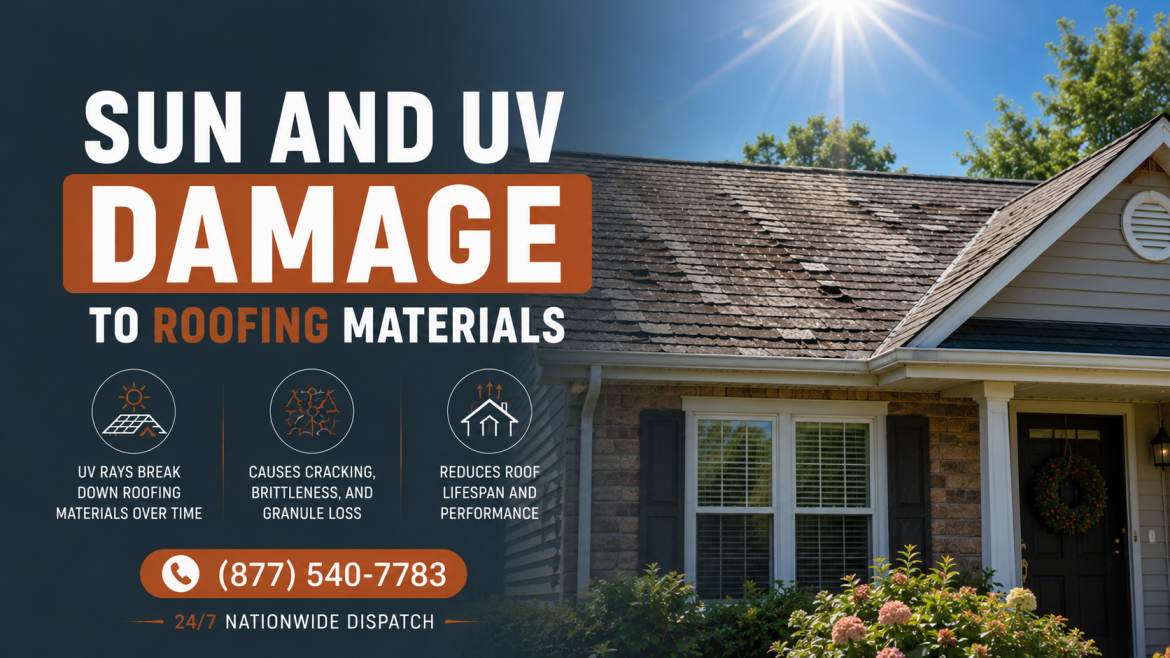
Every other cause on the roof damage causes list is intermittent. Hail arrives in a storm. Wind arrives in a gust. Sun and UV exposure arrives every clear day, for the entire life of the roof, without exception.
That constancy is what makes sun damage both the most predictable roof cause and the most commonly ignored one. There is no single event to point to, no storm date to record, just a slow, cumulative process that eventually announces itself as brittleness and cracking.
This guide covers the chemistry behind UV degradation, why some slopes age faster than others on the exact same roof, and what actually slows the process down. Homeowners planning any related work can review the full directory of roofing services for options ranging from shingle repair to full replacement.
How Does Ultraviolet Radiation Actually Degrade a Roof?
Sun damage works through a chemical process, not a physical one, which sets it apart from every impact or pressure-based cause covered elsewhere in this series. Understanding that chemistry explains why the damage is gradual rather than sudden.
The Oxidation Process
Asphalt shingles contain oils that keep the material flexible, allowing it to expand and contract with daily temperature swings without cracking. Ultraviolet radiation breaks down those oils through a process called oxidation, the same basic chemical reaction that causes rust on metal.
UV exposure breaks molecular bonds in the asphalt's oil content over time
The material loses plasticizers, the compounds that keep it pliable
What remains becomes progressively harder and more brittle
Thermal cycling from daily heating and cooling accelerates the same process
Why Heat and UV Work Together
Ultraviolet radiation rarely acts alone. Roof surface temperatures in direct summer sun regularly exceed ambient air temperature by 40 degrees or more, and that heat accelerates the same oxidation reaction that UV radiation starts.
In practice: a shingle on a south-facing slope experiences a compounding effect from both direct UV exposure and elevated surface temperature simultaneously. That combination is why south-facing slopes fail measurably earlier than north-facing ones on the same roof.
Why Do Some Roof Slopes Age Faster Than Others?
A single roof rarely ages uniformly, and the pattern of that unevenness is directly tied to sun exposure rather than to material defects. This is one of the more reliable diagnostic signs available to homeowners.
The South and West Exposure Pattern
South-facing slopes receive the most direct, sustained sunlight throughout the day in the Northern Hemisphere. West-facing slopes see slightly less total exposure but catch the most intense afternoon sun, when temperatures peak.
Slope Direction | Relative UV Exposure | Typical Aging Pattern |
|---|---|---|
South-facing | Highest sustained exposure | Fastest granule loss and brittleness |
West-facing | High, concentrated in afternoon | Fast aging, slightly behind south |
East-facing | Moderate, morning sun only | Noticeably slower aging |
North-facing | Lowest direct exposure | Slowest aging, often outlasts other slopes by years |
A roof replacement decision driven by one badly aged slope sometimes overlooks that the other three slopes have years of remaining service life. Section-specific assessment, rather than treating the whole roof as a single unit, occasionally changes that calculation.
How Roof Color Affects UV Absorption
Darker shingles absorb more solar radiation than lighter-colored ones, which translates directly into higher surface temperatures and faster oxidation. That relationship is well established enough that some jurisdictions offer incentives for reflective roofing in high-heat climates.
Color choice becomes a genuine tradeoff in high-UV regions. A darker roof may better match a home's aesthetic while shortening the covering's effective lifespan compared to a lighter alternative in the same location.
Manufacturers have responded with granule coatings engineered to reflect more solar energy while still delivering a dark visual appearance. These products cost more upfront but can narrow the performance gap against lighter colors in the highest-exposure climates.
Which Roofing Materials Resist UV Best?
Material choice changes both the rate and the visible pattern of sun damage considerably, which matters most for homeowners in consistently high-UV climates making a replacement decision.
Asphalt shingles show the most visible UV aging, through granule loss and surface chalking
Metal roofing resists UV degradation structurally, though coatings can fade over decades
Clay and concrete tile are largely UV-inert, since the material itself does not oxidize
Slate is essentially immune to UV degradation, one reason it can exceed a century of service
Membrane roofing varies widely, with some products specifically UV-stabilized and others not
The comparison across all these options is covered in more depth in the roofing materials guide, including expected service life ranges for each.
Sealant and Flashing Vulnerability
Roofing sealant degrades faster under UV exposure than the shingles it protects, which makes it a common early failure point even on a roof that otherwise looks sound. Hardened, cracked sealant at penetrations is frequently the first visible sign of cumulative sun damage anywhere on the roof.
What Does UV Damage Actually Look Like?
UV degradation produces a recognizable set of visual signs that differ meaningfully from storm-related damage, which matters when trying to distinguish it from hail damage or ordinary aging during an inspection.
Sign | What It Indicates |
|---|---|
Chalky, faded surface color | Granule binder breaking down under sustained UV |
Brittle edges that snap rather than bend | Loss of the shingle's original flexibility |
Thermal cracking across the tab | Repeated expansion and contraction cycling |
Hardened, split sealant at penetrations | Sealant reaching the end of its UV-resistant life |
Curling at the tab edges | Combined heat and UV effect on the shingle's structure |
The distinguishing trait against storm damage is uniformity. UV degradation spreads evenly across an exposed slope, while hail leaves random circular marks and wind concentrates at edges and corners.
How Poor Ventilation Compounds UV Effects
Attic ventilation and UV exposure interact in a way that surprises many homeowners. A poorly ventilated attic bakes the shingle from underneath at the same time the sun bakes it from above, roughly doubling the thermal stress on the same material.
Roof wear and aging, the broader category UV damage falls under, accelerates measurably faster on any roof where trapped attic heat adds to direct solar exposure. Correcting ventilation is one of the few interventions that meaningfully slows this specific cause.
Which States Face the Highest Sun and UV Exposure?
UV intensity varies by latitude, elevation, and annual clear-sky days, which concentrates the highest roof exposure in a specific band of states more than temperature alone would suggest.
Arizona, combining high elevation deserts with consistently clear skies
Texas, with sustained high UV exposure across a long summer season
Florida, adding humidity and heat to already-high tropical UV levels
Nevada, sharing desert elevation exposure similar to Arizona
California, spanning a wide range of high-UV climate zones across the state
Roof replacement services across Arizona see UV-related shingle failure well ahead of manufacturer-rated lifespans as a routine finding, given the state's combination of elevation and near-constant sun exposure. Shingle repair covering Texas deals with a similarly accelerated aging curve across the state's long, intense summer season.
Roof services across Florida face a distinct compounding factor, where humidity interacts with heat to stress both the shingle and its sealant simultaneously. Roofing repair coverage in Nevada tracks closely with Arizona's desert exposure pattern. Roof replacement across California spans the widest range of UV conditions of any state in this group, from coastal fog belts to intense inland desert exposure.
Can UV Damage Be Slowed or Prevented?
UV exposure itself cannot be eliminated, but its rate of damage responds measurably to a handful of interventions that address the compounding factors rather than the sunlight itself.
Balanced attic ventilation reduces the heat compounding UV's effect from below
Lighter shingle colors reduce solar heat absorption in high-UV climates
UV-rated sealants and coatings extend the service life of vulnerable penetration points
Reflective or "cool roof" rated products reduce surface temperature measurably
None of these measures stop UV degradation entirely. They shift the timeline, often by years, which matters considerably for a homeowner weighing repair against full replacement on an aging roof.
When UV Damage Becomes a Repair Decision
A roof showing early UV wear on one slope while the rest remains sound presents a genuine choice between full replacement and targeted shingle repair limited to the affected section. That decision usually comes down to how many years of remaining life the less-exposed slopes still have.
Does UV-Weakened Roofing Fail Faster Under Other Stresses?
A roof compromised by sustained sun exposure rarely fails from UV alone. More often, the degradation reduces its resistance to whatever the next storm or activity brings, turning a moderate event into a genuine failure.
The Connection to Foot Traffic
Foot traffic damage illustrates this compounding effect clearly. A brittle, UV-aged shingle cracks under a technician's weight in conditions where a newer, more flexible shingle would simply flex and recover.
That interaction matters directly for solar installation and maintenance work, since panel installers and service technicians need roof access regardless of the covering's condition. An aging, sun-baked roof scheduled for solar work often benefits from addressing the UV wear first, rather than adding foot traffic risk to an already-weakened surface.
When Installation Shortcuts Accelerate the Timeline
Installation defects can shorten a roof's effective resistance to UV damage well before the manufacturer's rated lifespan would predict. Missing or improperly ventilated intake at the soffit, for example, traps additional heat against the underside of the deck from day one.
A roof installed without correcting an existing ventilation shortfall inherits accelerated UV aging on top of whatever exposure its location and orientation already guarantee. The two causes compound rather than simply adding together.
What Should Happen if UV Aging Has Already Opened a Gap?
Brittle, cracked shingles occasionally split enough to create an active opening, particularly during a wind event that a newer shingle would have resisted without issue. That scenario calls for the same urgency as any other breach.
Photograph the cracked or split section before any temporary covering goes on
Arrange roof tarping the same day if the opening exposes the underlayment or decking
Note whether the crack appears isolated or consistent with the slope's overall wear pattern
Schedule a full inspection to determine whether the issue is isolated or roof-wide
Treating a UV-related crack as an emergency rather than a cosmetic issue prevents what began as a slow, gradual cause from suddenly producing an active water intrusion problem during the next rain.
Frequently Asked Questions About Sun and UV Damage
Does the Sun Actually Damage Roof Shingles?
Yes, through a chemical oxidation process that breaks down the oils keeping asphalt flexible. This happens continuously throughout a roof's life, unlike storm perils that strike in isolated events.
How Does Heat Affect a Roof Beyond Just Sunlight?
Heat accelerates the same oxidation reaction that UV radiation starts, and it works from both directions on a poorly ventilated roof, from the sun above and trapped attic heat below.
Do All Roof Slopes Age at the Same Rate From Sun Exposure?
No. South and west-facing slopes typically show UV wear years before north-facing slopes on the identical roof, since exposure intensity varies significantly by direction throughout the day.
Can UV Damage Be Repaired, or Does It Always Require Full Replacement?
It depends on how far the degradation has progressed and how evenly it is distributed. Isolated UV wear on one slope can sometimes be addressed with targeted repair, while roof-wide brittleness generally points toward full replacement.
Does Roof Color Really Make a Measurable Difference?
Yes. Darker colors absorb more solar radiation and run hotter, which accelerates the oxidation process compared to lighter colors in the same climate and exposure conditions.
Is Sun and UV Damage Covered by Homeowners Insurance?
No, generally. UV degradation is treated as gradual wear and tear, which standard homeowners policies exclude, since it results from ordinary aging rather than a sudden, accidental event.
Does a Roof's Age Change How Much UV Damage It Can Tolerate?
Yes, considerably. A newer shingle still contains most of its original plasticizing oils and flexes readily under stress, while an older shingle nearing the end of its rated life has already lost much of that flexibility, making it far more vulnerable to cracking under the same UV exposure, hail impact, or foot traffic.
Can a Skylight or Vent Accelerate UV Damage Nearby?
Reflective surfaces near a skylight frame or metal vent stack can intensify UV and heat exposure on the immediately surrounding shingles, sometimes producing localized aging that outpaces the rest of the same slope. This pattern is easy to mistake for a material defect when the actual cause is simply concentrated reflected sunlight.