
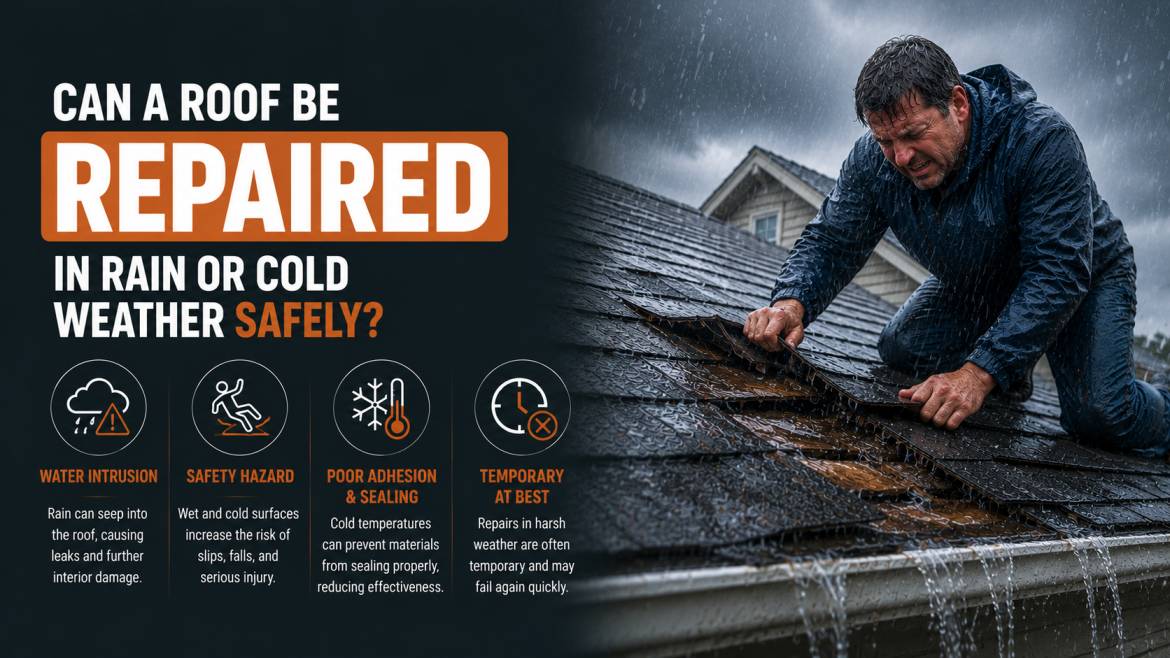
A homeowner with an active leak during a cold snap often assumes the fix is simple: get someone up there and seal it. The physics of the repair itself frequently disagree. Asphalt shingle seal strips depend on solar heat to activate, and most roofing adhesives specify a minimum application temperature below which they will not cure correctly, regardless of how skilled the crew performing the work happens to be.
This is not a matter of contractor caution or scheduling preference. A shingle installed below the correct temperature threshold looks identical to one installed under ideal conditions, but it has not actually formed the bond that keeps it in place through the next windstorm. Understanding this distinction changes how a homeowner should think about weather-constrained repair timing.
This guide covers what weather genuinely prevents, what can still proceed regardless of conditions, and how to plan permanent repair around a realistic weather window. It connects to the broader roof repair process, and the services directory covers both emergency and scheduled repair options.
How Does Cold Weather Affect Roof Repair?
Cold temperature interferes with the specific chemistry that makes a roof repair durable, not just the comfort of the crew performing it.
Why Seal Strips Need Heat?
Asphalt shingles ship with a factory-applied adhesive seal strip that bonds each course to the one below it once warmed by direct sunlight. In cold weather, that bond simply does not form on schedule, leaving a shingle mechanically fastened but not truly sealed until warmer conditions eventually activate the strip.
Temperature Range | Typical Effect on Sealing |
|---|---|
Above 70°F | Seal strips activate readily under normal sun exposure |
40°F to 70°F | Activation slows, may take longer or require more direct sun |
Below 40°F | Most standard adhesives struggle to cure reliably |
In practice: the exact threshold varies by specific product, and manufacturer specifications for any given material should take precedence over a general rule of thumb. A repair completed in genuinely cold conditions is not necessarily unsafe immediately, but it carries elevated wind vulnerability until warmer weather finally allows the seal to form.
Why Air Temperature Alone Does Not Tell the Whole Story?
A thermometer reading is a starting point, not a complete answer, since several other conditions affect whether an adhesive actually cures on schedule even at an acceptable air temperature.
Surface temperature on a shaded, north-facing slope can run considerably colder than the ambient air reading suggests
Wind chill affects human comfort but does not change the actual material temperature the way it feels like it should
Overnight temperature swings matter as much as the daytime high, since many products specify a minimum sustained temperature over a set curing window, not just the temperature at the moment of installation
Direct sun exposure on a dark shingle can push surface temperature well above the surrounding air temperature, sometimes enough to activate a seal strip even when the forecast alone looked marginal
A contractor checking a surface thermometer directly on the roof, rather than relying solely on a general weather forecast, gets a meaningfully more accurate picture of whether conditions actually support a durable repair that day.
How This Affects Repair Method Choice?
Repair roofing methods that depend heavily on adhesive activation, such as standard spot patching, are more weather-sensitive than methods relying primarily on mechanical fastening. A contractor facing a cold-weather emergency sometimes favors a mechanically secured temporary fix over a fully adhesive-dependent one specifically because it does not depend on temperature to hold.
The Cold-Weather Workaround
Hand-sealing with roofing cement is the standard workaround for repairs that genuinely cannot wait for warmer conditions, manually applying adhesive rather than relying on the factory strip's solar activation. This approach works as an interim measure but is generally considered less durable than a properly activated factory seal, which is why permanent, non-emergency repair is usually better scheduled for a warmer window where the option exists.
How Long Does a Cold-Weather Workaround Typically Last?
A hand-sealed repair performed as a cold-weather interim measure is not intended as a permanent solution, and setting that expectation clearly at the time of the work avoids confusion later. Depending on the specific product and application, an interim hand-seal generally holds through the remainder of the cold season, with a follow-up visit once temperatures allow a proper factory-strip activation, or a full reseal, to complete the durable version of the fix.
Document the interim repair with photographs and the date it was performed
Confirm with the contractor when weather conditions are expected to allow permanent completion
Schedule the follow-up visit proactively rather than waiting for the interim fix to fail
Treat the interim period as still requiring normal weather monitoring, since it remains more vulnerable than a fully cured repair
Can You Roof in the Rain?
Wet conditions create a different set of problems than cold, affecting both safety and material performance simultaneously.
Why Rain Stops Most Repair Work?
Wet shingle surfaces become significantly more slippery, raising fall risk considerably
Moisture trapped beneath new material during installation can cause problems that surface later
Adhesives and sealants generally require a dry surface to bond correctly
Water actively entering an open repair area during work can worsen the very problem being fixed
Wind frequently accompanies rain, compounding both the safety risk and the material handling difficulty
How Humidity Alone, Without Active Rain, Still Affects Curing?
Even without active precipitation, high ambient humidity can slow adhesive cure time meaningfully compared to a dry, sunny day. Coastal and consistently humid regions sometimes need to plan for longer cure windows than a simple temperature check alone would suggest, since moisture in the air affects the same chemical process that heat drives.
Ice dams illustrate a related but distinct weather complication, since the ice itself often needs steam-based removal, a process that works regardless of ambient temperature, before any actual repair to the affected shingles can even begin.
The Exception: Emergency Mitigation
Emergency mitigation, tarping an active breach or containing interior water, proceeds in essentially any weather, since the cost of continued exposure during a storm outweighs any disadvantage of working in suboptimal conditions. This is a fundamentally different category of work than a permanent, adhesive-dependent repair, and treating them the same leads to unrealistic expectations either way.
Rain and Hail Often Arrive Together
Hail damage roof repair frequently gets scheduled in the immediate aftermath of the same storm that produced heavy rain, which means the ideal repair window, dry and warm, often arrives days or weeks after the damage itself. Documenting the damage promptly still matters for insurance purposes even when the actual physical repair has to wait for better conditions.
What Work Can Still Happen in Bad Weather?
A meaningful category of roof-related work proceeds regardless of temperature or precipitation, and distinguishing it from weather-dependent permanent repair prevents unnecessary delay on genuinely urgent situations.
Weather-Independent Work
Emergency tarping over an active breach
Interior water containment and mitigation
Steam-based ice dam removal, which works in freezing conditions specifically
Structural assessment and documentation, which does not depend on adhesive cure
Roof tarping exists specifically to bridge the gap between weather-blocked permanent repair and an active need for protection, and it remains available regardless of the conditions preventing the permanent fix from proceeding immediately. Emergency leak repair covers the interior side of that same gap, addressing active water intrusion while the permanent exterior fix waits on weather.
What Should Happen First in a Weather-Blocked Situation?
Which roof damage needs immediate repair still applies during weather-blocked periods, and the correct sequence typically starts with temporary protection, moves to interior containment if needed, and schedules the permanent fix for the next available weather window rather than forcing adhesive-dependent work under conditions that will not let it cure properly.
How Do You Plan Repair Timing Around Weather?
Understanding regional weather patterns helps set realistic expectations for when a non-emergency repair can actually proceed on a permanent basis.
Seasonal Planning Considerations
Repair timeline estimates should account for the local weather window realistically, since a contractor quoting a two-day job during a stretch of favorable weather is describing something genuinely different than the same quote during an unpredictable transitional season.
Region Type | Typical Best Repair Window |
|---|---|
Northern, cold-winter states | Late spring through early fall |
Consistently wet coastal states | Drier stretches between rainy seasons |
Hot, dry southern states | Cooler months, avoiding peak summer heat for crew safety |
Moderate four-season states | Spring and fall generally offer the most favorable balance |
Storm-Driven Scheduling Pressure
Storm damage repair following a significant regional event often creates pressure to complete work quickly, sometimes pushing crews to work in marginal weather conditions to meet demand. A homeowner facing this pressure should weigh the genuine urgency of their specific damage against the value of waiting for a better weather window, rather than assuming faster is always better regardless of conditions.
Questions Worth Asking About Weather-Constrained Scheduling
A contractor scheduling work during a marginal weather stretch should be able to answer specific questions about how conditions will affect the outcome, not just confirm a date.
What specific temperature or precipitation conditions would cause the work to be rescheduled
Whether a cold-weather hand-seal workaround will be used, and if so, when the follow-up completion is planned
How the crew handles a mid-project weather change once work has already started
Whether the warranty terms differ for work performed outside ideal conditions
Which States See the Most Distinctive Weather-Related Repair Constraints?
Weather constraints on repair timing vary enormously by state, shaped by each region's dominant climate pattern.
North Dakota, where sustained extreme cold genuinely limits the practical repair season each year
Minnesota, sharing a similarly narrow cold-weather window with its northern neighbor
Washington, where sustained regional rainfall narrows the reliable dry-weather window considerably
Massachusetts, where New England winters add a comparable cold-weather constraint to the Upper Midwest
Wisconsin, sharing lake-effect cold exposure with neighboring Minnesota and North Dakota
Wind damage roof repair across North Dakota operates within one of the most weather-constrained repair seasons in the country, where sustained sub-freezing stretches genuinely limit when adhesive-dependent work can reliably proceed. Roof repair services across Minnesota shares that same narrow seasonal window tied to comparably severe winter conditions.
Storm damage repair across Washington contends with sustained regional rainfall that meaningfully narrows the annual window for dry, cure-friendly conditions. Roof repair coverage across Massachusetts faces a related cold-weather constraint tied to New England's winter severity. Emergency leak repair across Wisconsin rounds out the group, sharing the lake-effect cold exposure pattern common across its neighboring Upper Midwest states.
Frequently Asked Questions About Weather and Roof Repair
Can You Replace a Roof in the Rain?
Effectively, no. Wet surfaces raise fall risk considerably, and most adhesives and sealants require a dry surface to bond correctly. Only emergency mitigation, such as tarping, proceeds during active rain, with permanent repair scheduled for drier conditions.
What Temperature Is Too Cold for Roofing?
It varies by specific product, but most standard asphalt shingle adhesives struggle to cure reliably much below 40 degrees Fahrenheit. Manufacturer specifications for the exact product being used should take precedence over any general threshold.
Can Emergency Roof Repairs Happen in Any Weather?
Yes, for mitigation work specifically. Tarping an active breach and containing interior water proceed regardless of conditions, since the roofing damage repair cost of continued exposure outweighs the disadvantage of working in suboptimal weather. Permanent, adhesive-dependent repair is what genuinely waits for a better window.
Does Cold Weather Repair Ever Fail Immediately?
Not usually immediately, which is part of what makes it deceptive. A cold-weather repair can look complete and hold for weeks or months before an unsealed seam finally gives way under a wind event that a properly cured seal would have resisted without issue.
How Do Contractors Work Around Cold Weather When a Repair Cannot Wait?
Hand-sealing with roofing cement is the standard workaround, manually applying adhesive rather than relying on the shingle's factory seal strip to activate through solar heat. This provides interim protection but is generally considered less durable than a properly cured factory seal.
Should I Wait for Better Weather Even if My Repair Feels Urgent?
It depends on genuine urgency, not just discomfort with the wait. Active water intrusion or structural risk warrants immediate mitigation regardless of weather, while a stable, contained issue can often reasonably wait for conditions that allow a properly cured, more durable permanent fix.
Does Wind Alone, Without Rain, Also Limit Repair Work?
Yes. Strong sustained wind makes ladder work and roof access genuinely unsafe well before rain becomes a factor, and most crews will not send workers onto a roof during high wind regardless of temperature or precipitation. Material handling also becomes difficult and unsafe in strong wind, since loose shingles or underlayment can become airborne hazards.
Can a Roof Repair Be Rescheduled Multiple Times Due to Weather?
Yes, particularly during transitional seasons with unpredictable conditions. A reputable contractor communicates each rescheduling promptly and keeps any already-applied temporary protection in place until the permanent work can actually proceed, rather than leaving a roof exposed between failed attempts.